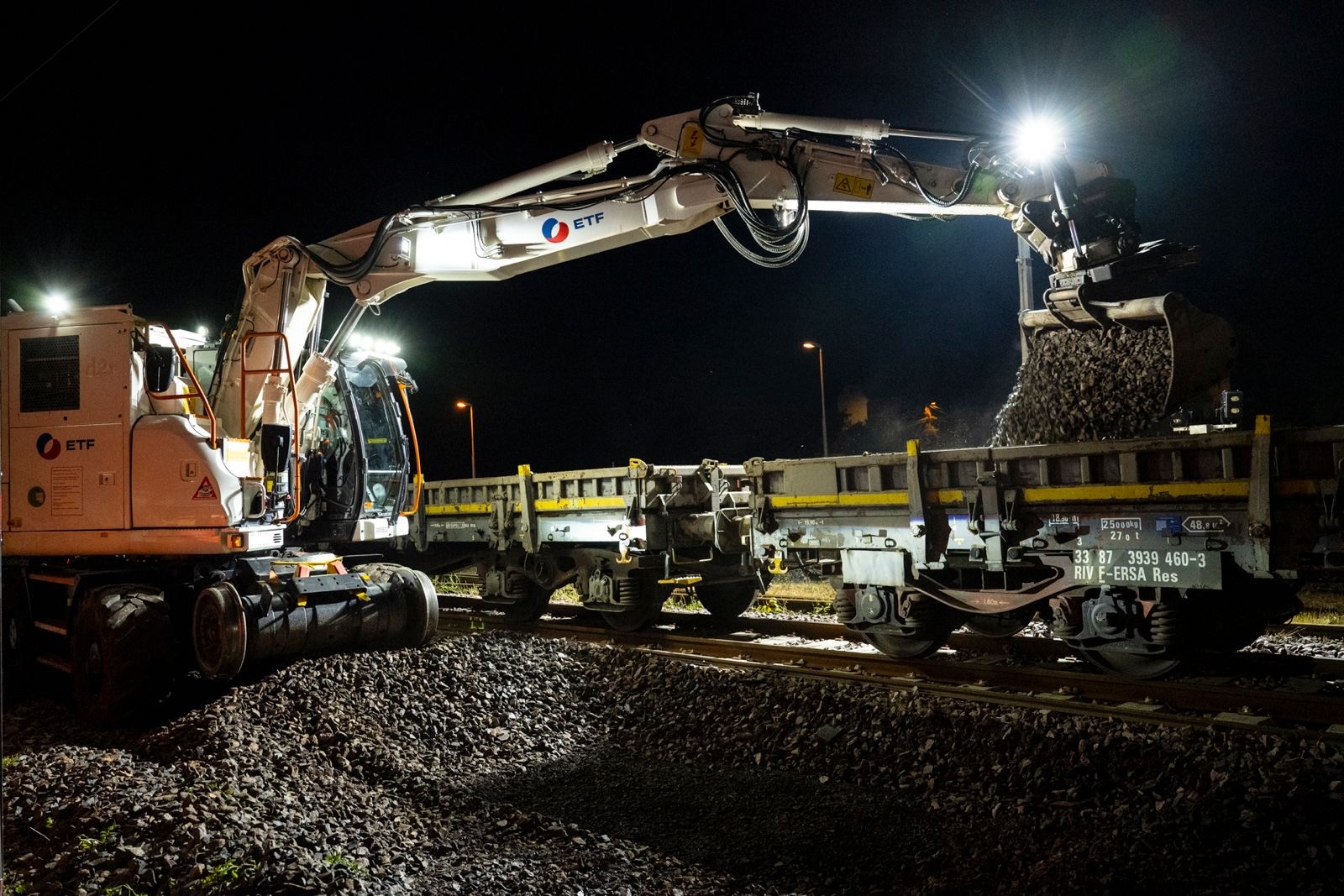
ETF continues to modernise the rail network in Sarreguemines
From the beginning of June until the end of the summer, ETF teams have been working in Sarreguemines (Moselle) to replace four sets of points and renew 14 kilometres of track. This strategic project is designed to improve the reliability of services, passenger comfort and the long-term viability of this line, which is vital to the region.
Cette opération s’inscrit dans la continuité d’un partenariat de confiance entre ETF et SNCF Réseau. Déjà mobilisée il y a trois ans sur une première phase de modernisation du secteur, l’entreprise intervient à nouveau pour poursuivre la transformation de l’infrastructure. Une marque de confiance qui témoigne de l’expertise des équipes ETF dans la conduite de chantiers ferroviaires complexes.
UA major challenge for the region’s local feeder lines
Situated on the border between Germany and Alsace, the project addresses significant operational needs. The condition of certain infrastructure no longer allowed trains to pass each other under optimal conditions. The aim is therefore to fully restore the line’s operational capacity and ensure its long-term viability.
The works form part of the national programme to regenerate the region’s local feeder lines, jointly led by the State, the Grand Est Region and SNCF Réseau. These lines play a vital role in residents’ daily mobility and in the development of a more sustainable transport system.
In Sarreguemines, some of the track equipment being replaced had been in service for nearly 70 years. Without this modernisation, temporary speed restrictions of as low as 40 km/h would gradually have had to be introduced. In the long term, this could have had a significant impact on the quality of service and the attractiveness of the line.
A project organised across two areas
Teams are working simultaneously in two areas:
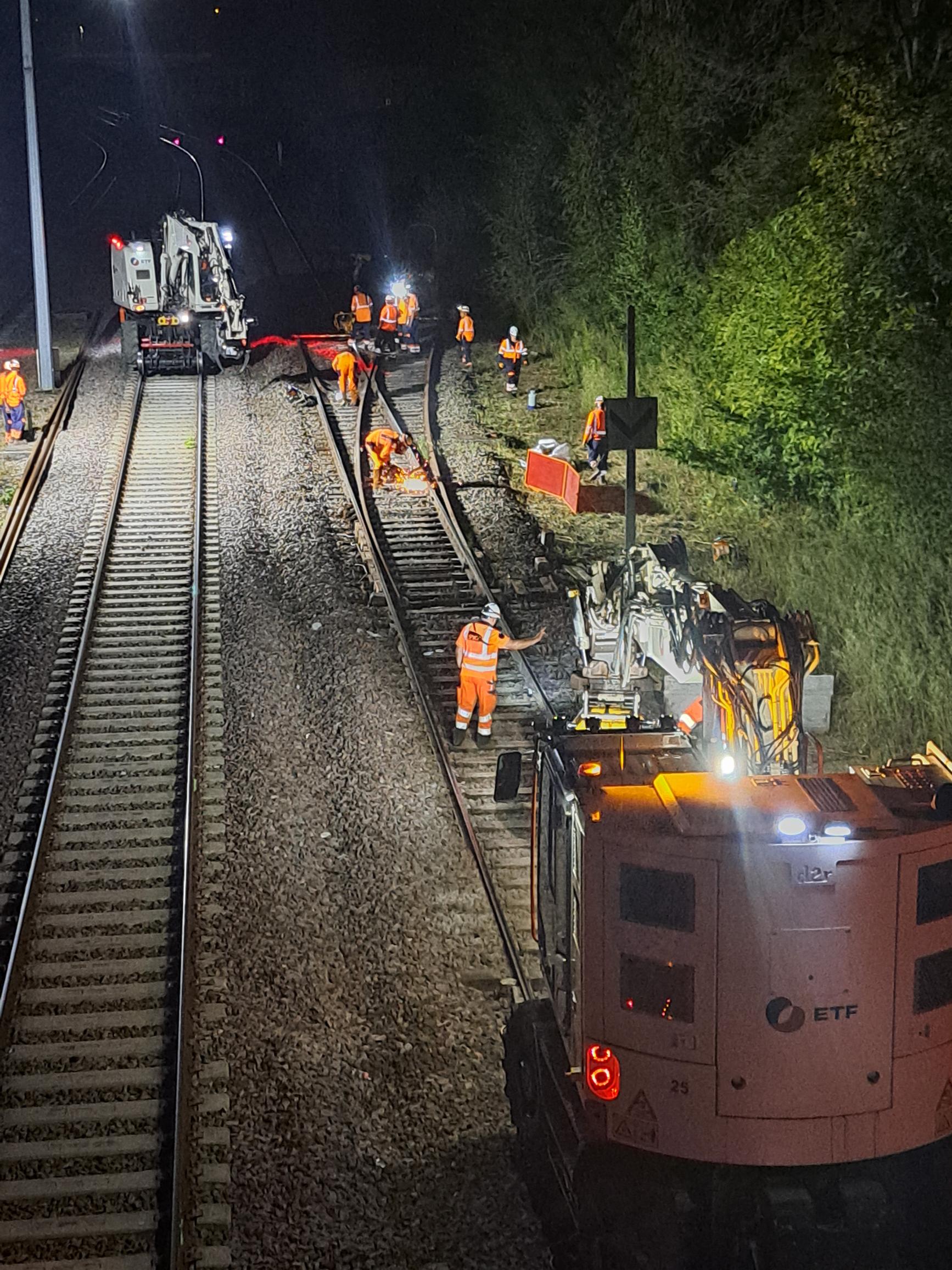
At Sarreguemines station, work is carried out mainly at night, during service interruptions. Three work fronts, each involving around ten staff members:
- Rail replacement and track clearance operations
- The replacement of points and track renewal;
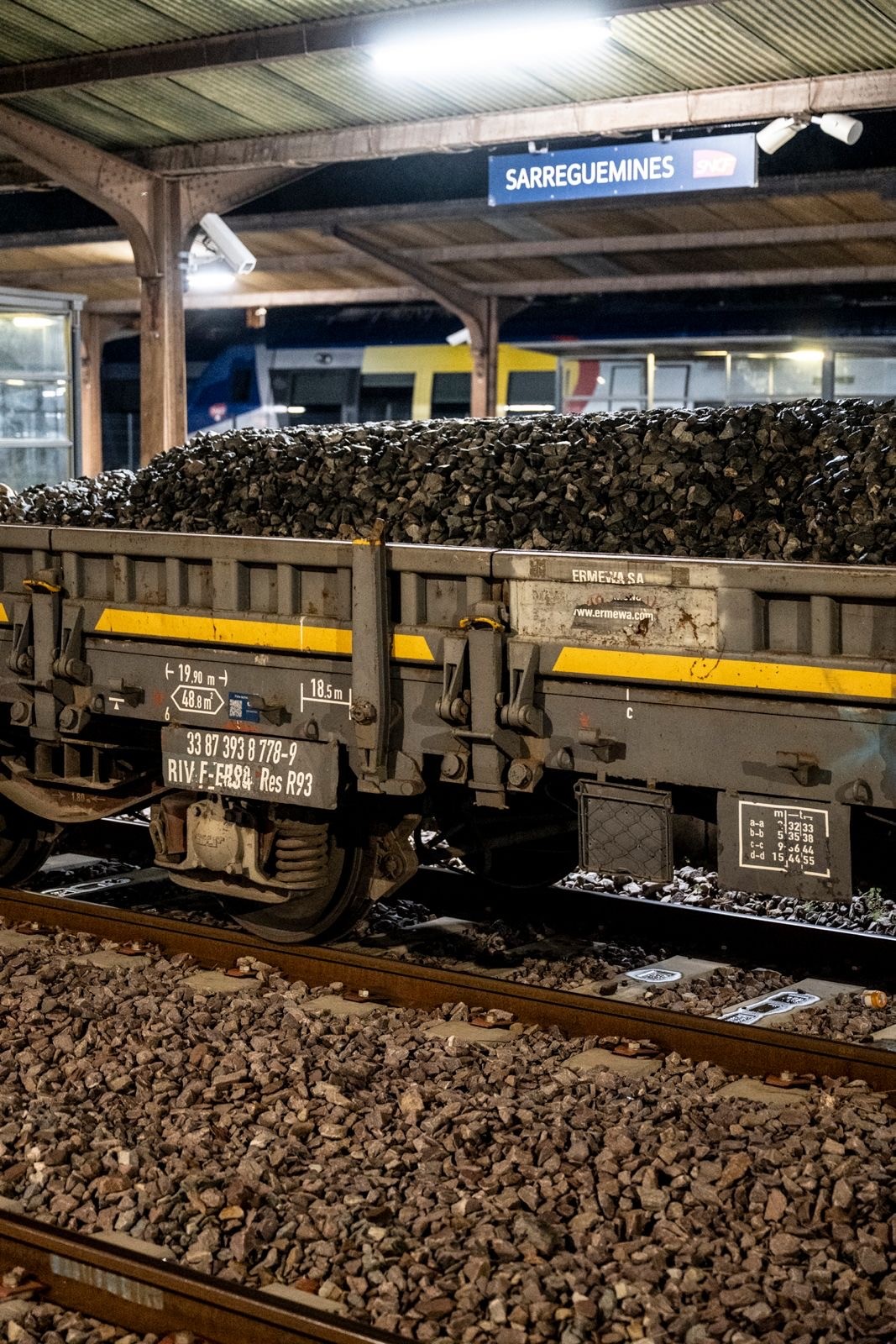
- Ballast laying, levelling and track stabilisation operations.
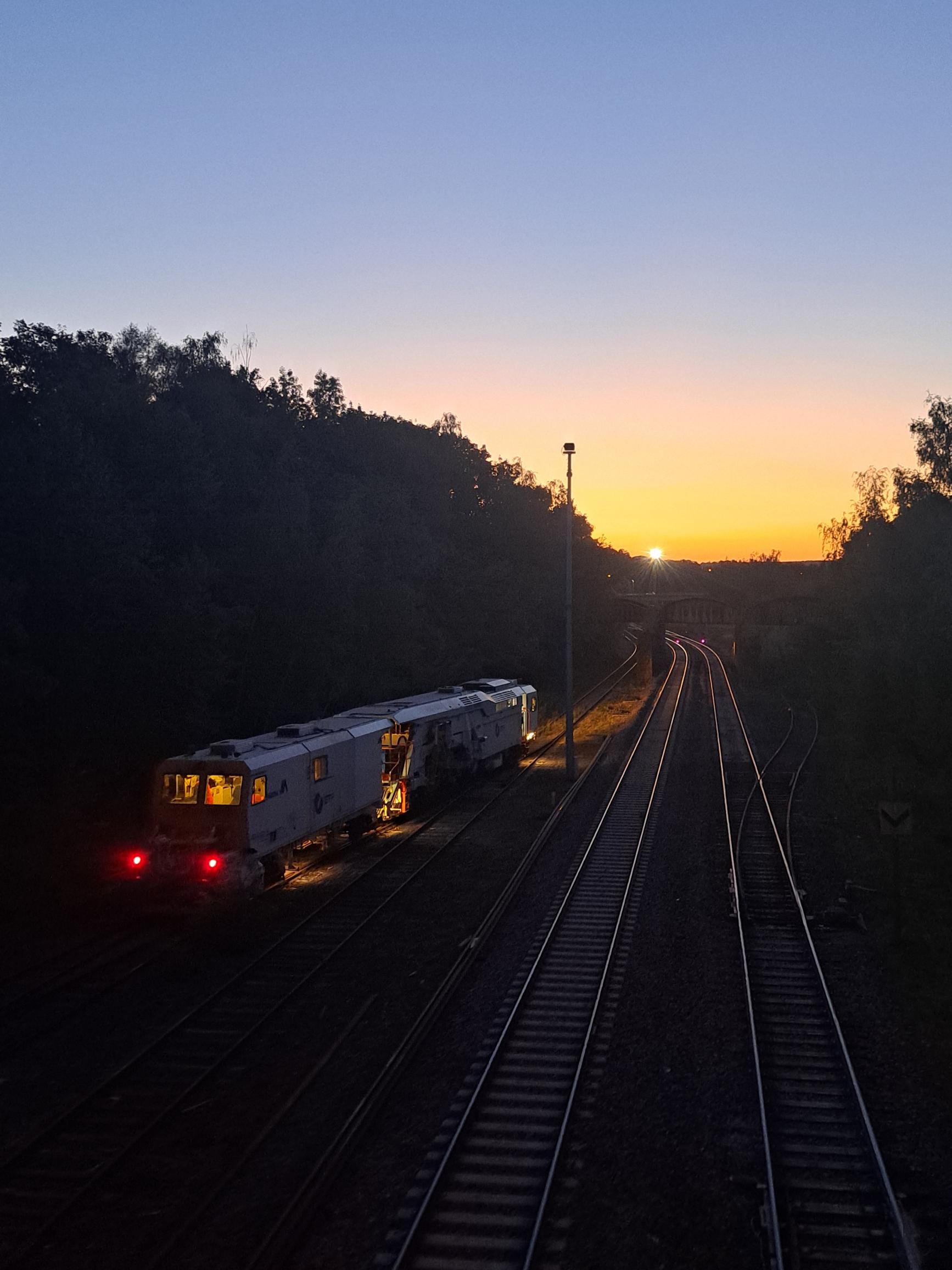
At the same time, a section of approximately 15 kilometres between Sarreguemines and Diemeringen is temporarily closed to traffic. This arrangement allows the teams to work for up to 16 hours a day and to optimise production rates.
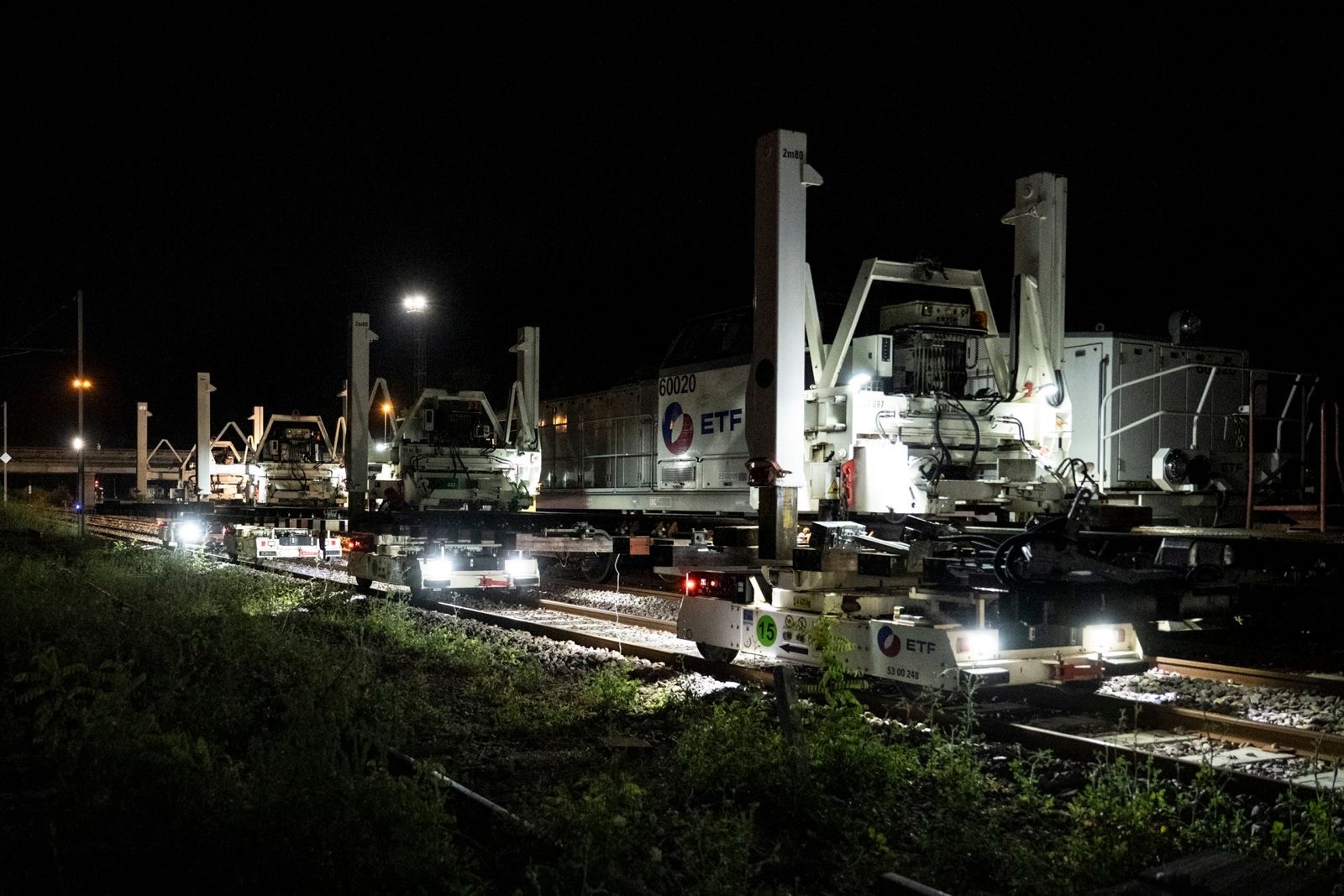
In total, the project involves the renewal of 14 kilometres of rails (i.e. 7 km of rail across both tracks) and the replacement of four sets of points. Delivered as kits and then assembled directly on site, these sets of points will restore the line to its full operational potential.
A collective mobilisation of ETF’s expertise
Nearly 30 staff members are working on site, divided into three teams of around ten people each.
The success of the operation relies on the complementary expertise of several ETF branches:
- The Grand Est Branch, in charge of track works, with support from the Centre, Nord and Sud-Est branches;
- La Champenoise, mobilised for clearance operations;
- ETF Services, responsible for railway safety services.
A project mindful of its environmental impact
Beyond the technical and operational challenges, environmental considerations are integrated into the organisation of the project.
Removed materials are systematically recovered. Old rails and sleepers are thus collected and then recycled by SNCF Réseau. On site, teams also carry out waste sorting and prioritise the use of recyclable materials and containers wherever possible.